Msaki: It’s always about the music
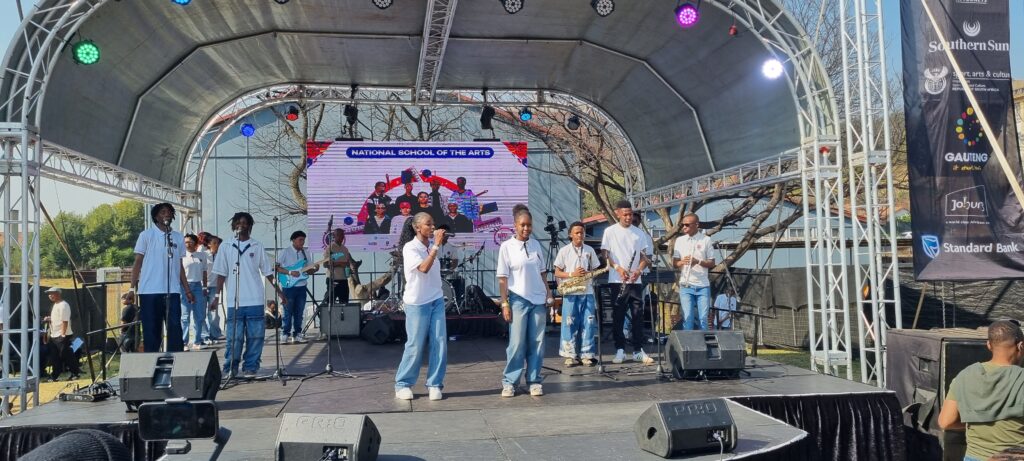
Following her performance with learners from schools in Standard Bank Joy of Jazz’s Jazz for Young People programme, award-winning singer-songwriter Msaki spoke to Bars n Rhymes about artistic integrity, independence, sustainability, and the realities of building a long-term career in music. For an artist whose work moves between folk, jazz, orchestral arrangements, and contemporary South African sounds, staying grounded has always come back to one thing: the music itself.
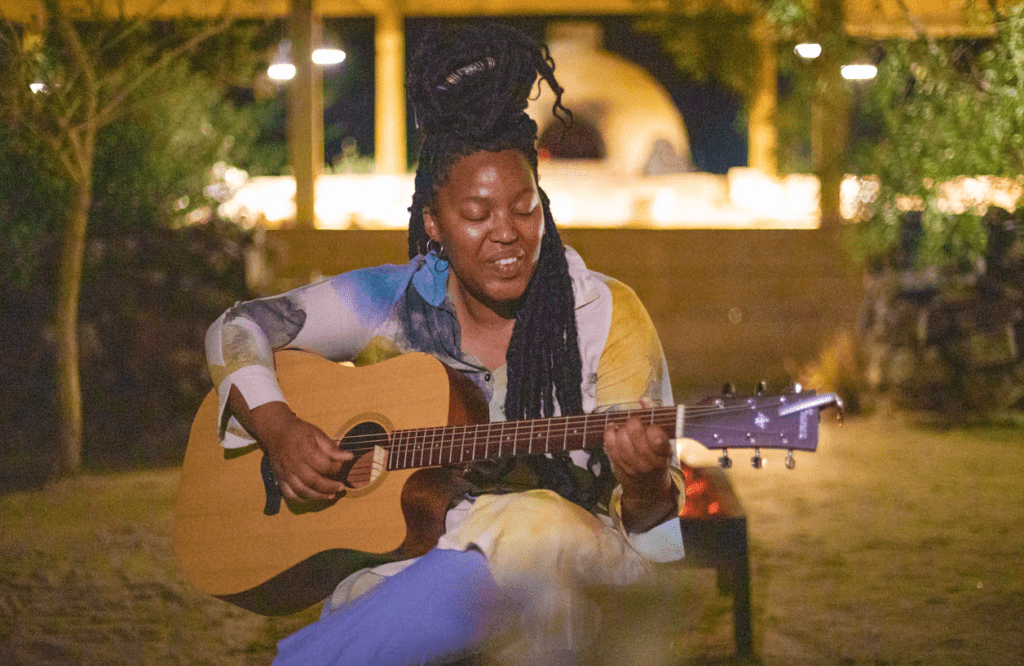
“I think first and foremost I’m just a lover of music,” she said. “Music has my utmost respect. It’s a place for me to understand myself, so it’s never been about the industry, it’s always been about the song.” That philosophy has guided her through an industry constantly searching for the next trend. Whenever she felt uncertain, she returned to the same question: what did the music need?
Independence beyond buzzwords
Although her music reached mainstream audiences, Msaki said she had always approached her career from an independent perspective. “I’m an independent artist first and foremost,” she said. “I’m interested in the structure of the music value chain. I have my own record label and I want to understand how to make a living off my music whether I’m on stage or not.”
Over the past 15 years she has focused not only on creating music, but also on understanding the business behind it. That included developing systems that allowed artists to earn income beyond live performances and to make career decisions from a position of choice rather than desperation.
“You don’t want to be doing every gig because you have no choice,” she said. She also pushed back against oversimplified industry advice, particularly around ownership. While owning masters is often presented as the ultimate goal, she argued that every artist’s situation is different and should be approached with proper business and legal understanding.
“Music is much more complicated than a slogan,” she said. “It’s about understanding each situation and the implications of every decision you make.”
Finding a digital rhythm
Like many artists, she had to negotiate the pressures of the digital era. She admitted that she initially struggled with the expectation to be constantly online and available. “I had to figure out how to engage in a way that makes sense to me,” she said. “I think everybody has their own digital blueprint.”
Rather than forcing herself into a relentless posting cycle, she chose a more intentional approach that aligned with her personality and energy levels. “Social media should be an extension of who you are,” she said. “It shouldn’t deplete you.”
Authenticity over obligation
Asked whether established artists had a responsibility to help develop emerging talent, Msaki rejected the idea that every successful musician had to contribute in the same way. “It’s not the onus of every single artist to build the industry,” she said. “Some of us need to just be excellent and be great examples. Some of us just need to be visible.”
She said meaningful contribution should come from a genuine sense of calling rather than obligation, adding that “the most authentic contribution is the most powerful one.”
The stage as sacred space
Despite her reputation as a compelling performer, she described the stage as a space that was both challenging and sacred. “The live stage is not the most natural place for me,” she said. “But once I drop into myself, it becomes a place where I hear songs differently.”
She believed audiences fundamentally shaped a performance, transforming familiar songs into new experiences through their listening and presence. “Live performance is a space of communion,” she said. “It’s a space to offer what has been given to you.”
That sense of shared experience had deepened her respect for performance over the years. “I’ve learned that the stage is sacred,” she said. “I can’t control everything that happens there, and I’ve come to revere and respect that.”
Advice: Take your time
Asked what advice she would give to young artists across all genres, Msaki’s answer was immediate: don’t rush. “Spend a lot of time finding your own voice,” she said. “Sit with your own ideas before rushing to be outside.” In an era where visibility often feels urgent, she encouraged emerging musicians to develop their sound privately, share it first with trusted friends and community, and allow their artistry to mature before seeking public validation.
“Take your time,” she said. “Practice your sound on your own. Be curious about how you want to sound. Trust your ideas.” Her final message returned to the same theme that had anchored the conversation from the start: authenticity. “Know that there is a space uniquely reserved for you if you are truly authentic with your journey.”